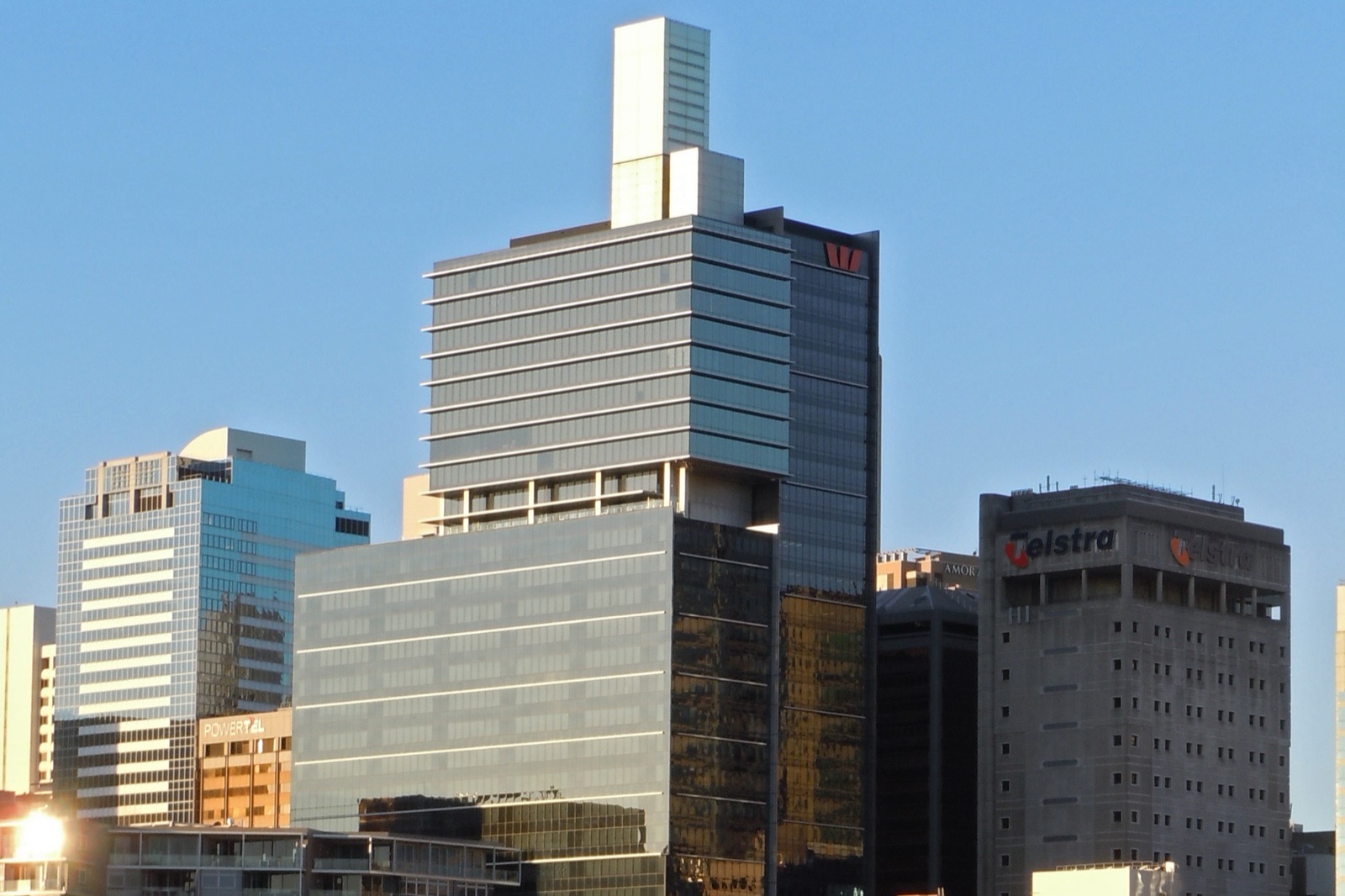
Westpac, one of Australia's four big banks, earned A$7.0 billion excluding one-off items in the year to 30 September, unchanged from a year earlier, after its charges for bad loans doubled to A$864 million, the bank said on Monday. Statutory net profit fell 1 per cent to A$6.8 billion.
The business underneath improved. Pre-provision profit, what the bank earns before setting money aside for loans that may sour, rose 4 per cent to A$10.93 billion, according to its ASX announcement. The impairment charge took all of it. The unusual part is that the bank's borrowers look healthier, not sicker.
Where did the operating gain go?
Into provisions. Pre-provision profit rose by A$379 million over the year, from A$10.55 billion. Impairment charges rose by A$440 million, from A$424 million to A$864 million, the bank's figures show. By this publication's arithmetic, the extra provisioning exceeded the whole operating gain by about A$61 million. Lower tax and a smaller minority share are what kept net profit level.
| A$ million | FY25 | FY26 | Change |
|---|---|---|---|
| Net operating income | 22,464 | 22,708 | +244 |
| Operating expenses | 11,916 | 11,781 | -135 |
| Pre-provision profit | 10,548 | 10,927 | +379 |
| Impairment charges | 424 | 864 | +440 |
| Net profit ex notable items | 6,972 | 6,992 | +20 |
Source: Westpac FY26 ASX announcement. Change column is our arithmetic.
Costs did their part. Operating expenses fell 1 per cent while income rose 1 per cent, and the expense-to-income ratio improved by 116 basis points to 51.9 per cent, the bank said.
Why provide more if loans look better?
Because management chose to. Stressed exposures fell to 1.17 per cent of total committed exposures from 1.28 per cent, the release says. But "given economic and geopolitical uncertainty," the bank "applied management judgement through new overlays for energy-intensive sectors and discretionary spending," and total credit impairment provisions rose to A$5.2 billion.
An overlay is a top-up to what the bank's loss models produce, held against risks the models do not yet see in repayments. Energy-intensive industries face the fuel and power bills of the Iran war. Discretionary spending is where households cut first when mortgage payments rise. The charge is a forecast, not a record of losses. That is our reading; the bank did not quantify each overlay in its announcement.
What did analysts make of it?
A slight miss on revenue, offset by costs. Profit was just above the A$6.96 billion analysts expected, ABC News reported, but the net interest margin narrowed 7 basis points to 1.87 per cent, below the 1.89 per cent forecast. Andrew Triggs of JPMorgan said the result was a 0.7 per cent miss excluding notable items, "driven by weakness in core NIM," ABC reported. John Storey of UBS said deposit and lending competition had taken 5 basis points off the core margin and expected that to persist into the 2027 financial year.
Growth came from companies, not households. Business lending rose 12 per cent and institutional lending 18 per cent, with energy, infrastructure and resources among the borrowers, while Australian housing loans excluding the sold RAMS portfolio rose 7 per cent, the bank said. Westpac shares closed up 1 per cent, ABC reported. The full-year dividend is 154 cents, up 1 per cent, and the common equity tier one ratio is 12.5 per cent, about A$2.9 billion above the bank's target.
What happens on Tuesday?
The Reserve Bank of Australia announces its rate decision at 2.30pm Sydney time on 3 November, and markets expect a quarter-point rise to 4.85 per cent, ABC reported. Anthony Miller, Westpac's chief executive, said in the bank's media release that "inflation remains above the Reserve Bank's target range and interest rates are likely to remain elevated into 2027."
Central banks elsewhere are making the same choice; the Bank of Canada raised rates only to see growth come in weaker days later. For Westpac, the test is whether the overlays turn out to be prudence or prophecy. If stressed exposures rise from 1.17 per cent at the half year in March, the bank provided in time. If they keep falling, some of this year's provisions could come back to profit as releases.
All Westpac financial figures, the description of the new overlays and Anthony Miller's remarks are from Westpac's FY26 ASX announcement and media release of 2 November 2026. The consensus figure, the 1.89 per cent margin forecast, the share price move, the comments from JPMorgan's Andrew Triggs and UBS's John Storey, the Reserve Bank meeting time and the expected 4.85 per cent cash rate are as reported by ABC News on 2 November 2026. The comparison of the rise in pre-provision profit with the rise in impairment charges, and the per-cent calculations not stated by the bank, are this publication's arithmetic. The analysis is our own.
Topics businessbankingAustraliainterest ratesearnings