The Pentagon is drawing up a requirement that every major U.S. military installation be able to keep its power, water, fuel and communications running for at least 90 days without outside support, according to internal planning documents reported by Fox News Digital on 25 October. The plan is called FORTRESS.
It has been described across the internet as a doomsday plan, and readers have asked whether it is a response to rogue artificial intelligence or an expected nuclear war. Nothing in the documents as reported, or in what officials have said publicly, points to either. What officials describe is narrower and more expensive: insurance against a large war that knocks out the civilian grid and breaks global supply chains.
What is FORTRESS?
FORTRESS America is a Pentagon program to make bases and the supply chains behind them able to keep working through a long disruption. Defense Secretary Pete Hegseth announced it on 30 September in his "State of the Force" address at Marine Corps Base Quantico, where he said the acronym stands for Federal Operations for Resilience, Troop Resources, Energy, Supply and Survivability, according to the U.S. Army. "The Department of War will be the insurance policy for the entire nation," he said.
His headline promise was power. "Every major military installation in America is going to generate its own power, independent of the civilian grid," Hegseth said, as quoted by Air & Space Forces Magazine. On 6 October, Michael Duffey, the under secretary for acquisition and sustainment, issued a memo starting a FORTRESS America Program Office with five pillars: space and spectrum resilience, installation hardening and cyber resilience, energy independence, supply chain and industrial base resilience, and a strategic defense reserve, DefenseScoop reported.
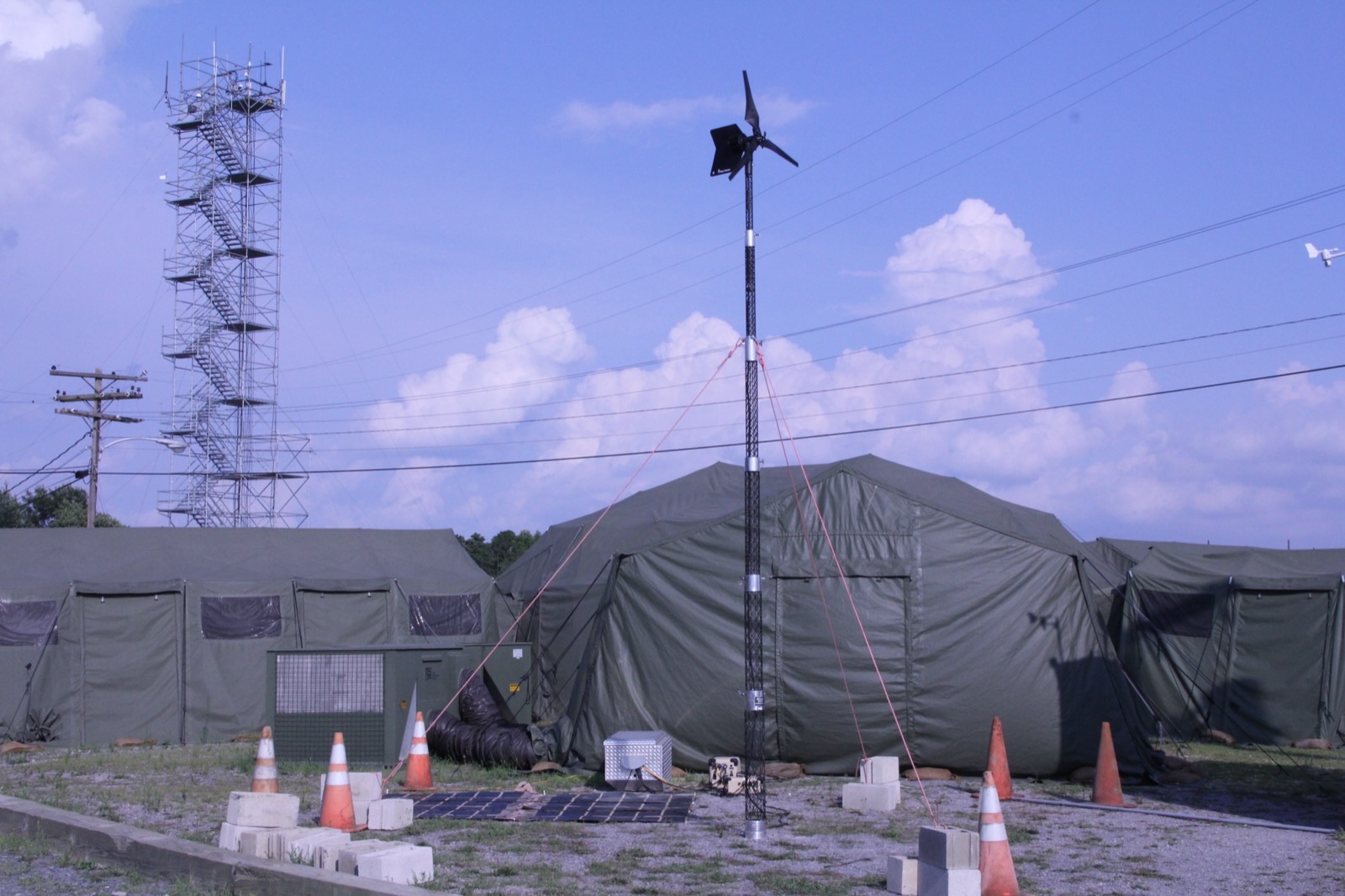
The 90-day standard comes from the documents Fox News Digital reviewed. This publication has not seen them, and the Pentagon has not published them, so the detail below rests on that single report. By Fox's account, the plan calls for strategic reserves of munitions, fuel, critical minerals, electronics, spare parts and medical supplies, sized to wartime consumption and to how long manufacturers take to replace stock. For the most critical dependencies it wants at least two qualified supply or production pathways, so that one lost factory does not stop production. It envisions portable nuclear reactors, large-scale battery storage and microgrids that can cut a base off from the civilian network.
Is it about AI or nuclear war?
No source reviewed for this article says so. The Fox report, the Army's account of Hegseth's speech, DefenseScoop's account of the memo and Fortune's review of the plan do not mention artificial intelligence as a threat. The word "nuclear" appears only in reference to reactors that would supply power. No adversary is named.
The stated rationale is conventional war on several fronts. "The next conflict will likely be fought on multiple fronts," Sean Parnell, the Pentagon's chief spokesman, told Fox News Digital. "When that happens, global supply chains will break." He added: "Power is combat now." Fortune noted a February 2024 joint advisory from U.S. security agencies about Chinese state-sponsored hackers known as Volt Typhoon. The Pentagon itself has not tied FORTRESS to any one country.
Who gets paid, and how much?
Nobody knows the total yet, including the Pentagon. At a 20 October roundtable a senior defense official said about 500 continental U.S. bases were being assessed, and that "the assessment timeline that we're in right now is trying to determine what is this going to cost," Air & Space Forces Magazine reported. The magazine's own reporter put the likely bill in the scores of billions of dollars, if not hundreds of billions, and said the full goal could take decades. That is a journalist's estimate, not an official one.
The clearest money so far predates FORTRESS. On 26 August the Army awarded agreements worth up to $2.2 billion under its Janus program to five companies to build nuclear microreactors at five bases, Washington Technology reported: Antares Nuclear at Fort Bragg, BWXT Advanced Technologies at Fort Campbell, General Atomics Electromagnetic Systems at Fort Hood, Radiant Industries at Fort Benning and Westinghouse Government Services at Fort Drum. The aim is a small nuclear plant on an Army installation by 2028. "We now know that our domestic electric grid is potentially at risk in a conflict," said Jeff Waksman, the Army's principal deputy assistant secretary for installations, energy and environment. On reactor fuel, much of which the U.S. imports, he said demand was "probably going to push beyond what our supplies are as a nation."
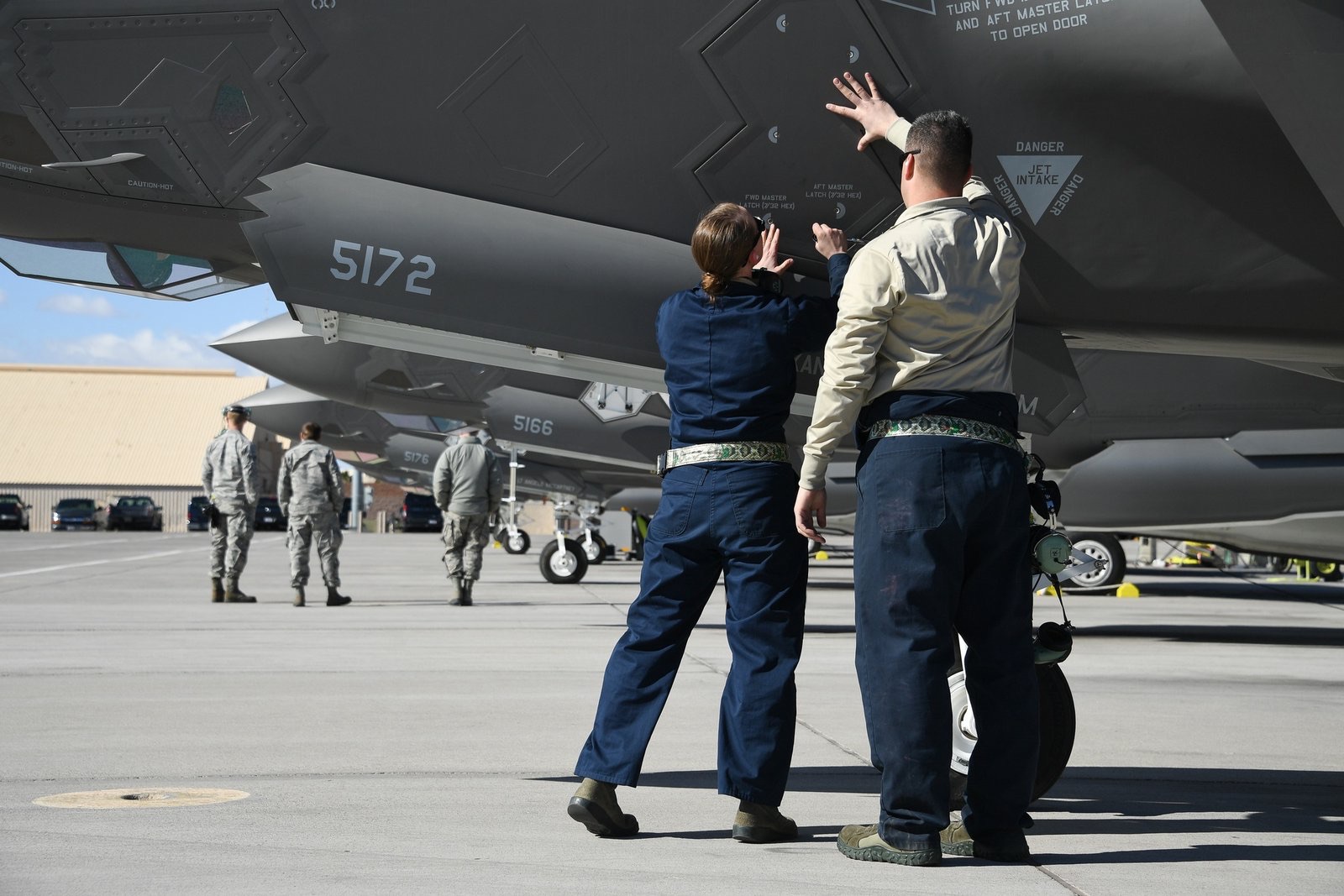
No source names suppliers for the battery storage, the spare parts or the medical reserves. The Fox documents also fold in the Civil Reserve Manufacturing Network, a plan to line up commercial factories that could switch to defense work in a crisis, with contracts and procedures agreed in advance. For companies, that is the larger long-run opportunity, and it echoes the spare-parts problem this publication covered in the F-35 talks and the logic of paying for capacity before it is needed.
How does it compare with household stockpiling advice?
The household advice is far smaller and, by the British government's account, aimed at storms and wildfires rather than war. Britain's Cabinet Office launched its Be Ready campaign on 22 October, asking households to plan for three days of disrupted power, water, phone and internet service, and to keep "a small supply" of non-perishable food and bottled water. It says France, Ireland and the Netherlands use the same three-day principle. "Those who can follow this advice should follow this advice," said Dan Jarvis, the Security Minister.
Canada has issued no new campaign that this publication could find. Its standing guidance, from Public Safety Canada, is to be ready to look after a household for at least 72 hours. The European Union's 2025 preparedness strategy also points to 72 hours, Fortune reported.
Cranberry analysis: the scale of the asks
| Who | Standard | Set by |
|---|---|---|
| Major U.S. military bases | 90 days of power, water, fuel, communications | Pentagon planning documents (Fox News Digital) |
| UK households | 3 days | Cabinet Office, Be Ready, 22 October 2026 |
| Canadian households | 72 hours | Public Safety Canada, standing guidance |
| EU residents | 72 hours | EU preparedness strategy, March 2025 (per Fortune) |
By this publication's arithmetic, the base standard is 30 times the household one. The Janus awards cover five bases, or about 1 per cent of the roughly 500 being assessed, and average no more than $440 million a base if every dollar were spent. For scale, Air & Space Forces Magazine puts the restoration of a single base, Tyndall in Florida, at about $5 billion. Our reading is that power is the part with prices attached, and the reserves and second suppliers are where the unknown cost sits. That is inference, not a Pentagon figure.
What to watch
The test is the budget. Until the Pentagon puts a FORTRESS line in its next request, or names its first installations, the 90-day standard is a planning document reported by one outlet. The second test is whether the strategic reserve comes with multi-year purchase contracts, because that, more than any speech, is what would tell suppliers of critical minerals, electronics and medicine to build capacity.
The 90-day requirement, the list of reserves, the two-pathway rule, the power technologies, the Civil Reserve Manufacturing Network and the quotes from Sean Parnell are from Fox News Digital's report of 25 October 2026, based on documents it reviewed; this publication has not seen those documents. The acronym and Pete Hegseth's 30 September 2026 remarks are from the U.S. Army's account of the State of the Force address and Air & Space Forces Magazine. The 6 October memo and its five pillars are from DefenseScoop, 7 October 2026. The 500-base assessment, the senior official's quote and the Tyndall figure are from Air & Space Forces Magazine, 20 October 2026. The Janus microreactor awards and the quote from Jeff Waksman are from Washington Technology, 27 August 2026. The Be Ready details and the quote from Dan Jarvis are from the UK Cabinet Office, 22 October 2026, and its checklist; the EU's 72-hour guidance and the U.S. National Preparedness Month message are as reported by Fortune, 26 October 2026; Canada's 72-hour guidance is from Public Safety Canada. The ratios and per-base averages are this publication's arithmetic. The analysis is our own.