
The AI Nobody Approved Is Already in the Building
Employees adopted assistants on personal accounts long before any committee finished a review. Banning it moves the usage somewhere with no logging at all.

Friday, October 16, 2026
Employees adopted assistants on personal accounts long before any committee finished a review. Banning it moves the usage somewhere with no logging at all.
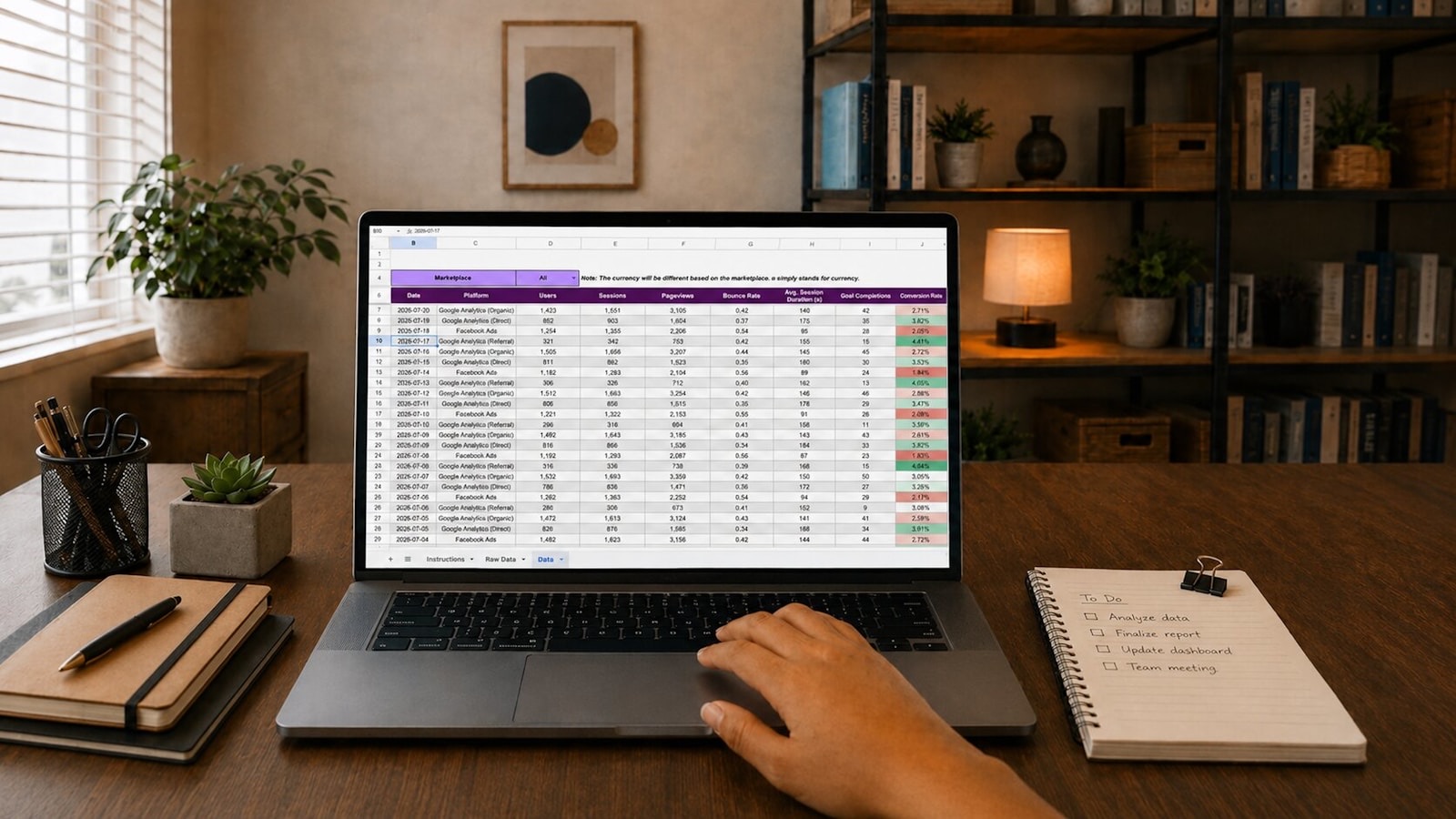
Deployments stall on the unglamorous discovery that the organisation cannot say what its own records mean. The model is fine. The inputs were never assembled for this.

Automated support handles more contacts than ever and the phones have not gone quiet. The gap between the two numbers is where the cost went.

Generated training data started as a substitute for records nobody could license. It is now chosen deliberately, for reasons that have less to do with scarcity than with control.

The work most exposed to automation is concentrated at the bottom of the org chart, which is also where the profession's training happened. Firms are removing the rung without deciding what replaces it.
Software that acts on a company's behalf has to log in somewhere. The identity systems it logs into were designed around a person who can be fired, and the gap between those two facts is now a live governance problem.

Enterprises spent a year making sure they could switch between model providers. The switch turns out to run through a small number of clouds, chips and inference platforms that no procurement policy addressed.

Training got the headlines and the capital budget. The recurring cost of running models in production is what finance departments are now trying to forecast, mostly badly.

The most consequential AI deployments of the year are not chatbots. They are agents reconciling invoices, chasing documents and closing tickets nobody wanted to touch.

After years of scraping first and negotiating later, AI developers are building formal licensing pipelines, and content owners are learning what their archives are worth.

Deployment has run well ahead of measurement. A striking number of production systems have no defensible answer to whether they are performing better than what they replaced.

Away from enterprise pilots and keynote demos, small firms are putting generative tools to work on the least glamorous parts of operating a business.

Procurement departments, tired of negotiating novel terms for every AI vendor, are converging on shared contract language for data handling, evaluation and exit.
The frontier gets the headlines, but the volume is moving to compact models that run cheaply, privately and close to the work.
Companies built production systems on models that vendors retire on their own schedule. The resulting migrations are unplanned, unbudgeted and increasingly frequent.