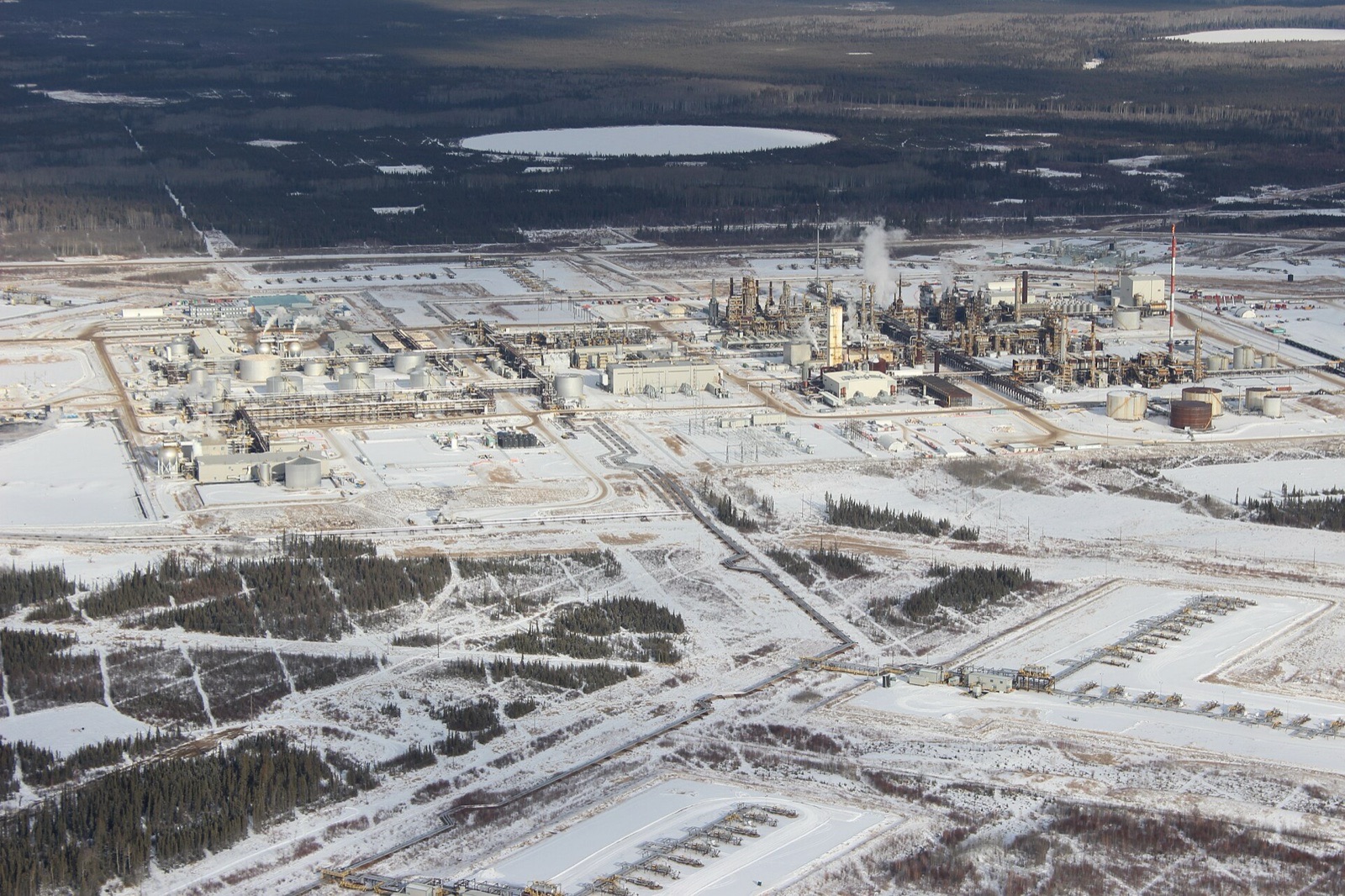
The largest shareholder in Greenfire Resources is also the largest shareholder in the company buying it. Strathcona Resources agreed on Monday to acquire Greenfire, an oil sands producer listed in Toronto and New York, in a deal it values at C$2.7 billion to C$2.9 billion including debt, and Waterous Energy Fund, which owns 72 per cent of Greenfire and 57 per cent of Strathcona, has agreed to support it.
Greenfire shareholders can choose C$11.00 a share in cash or 0.25 of a Strathcona share, according to the companies' announcement. The cash is a 39 per cent premium to Greenfire's closing price on Friday, 6 November, and the share option, worth C$9.09 at Strathcona's close that day, a 15 per cent premium. Neither choice will be pro-rated. Waterous Energy Fund, known as WEF, has said it will take shares.
Who gets what?
By our arithmetic from the share counts in Strathcona's release, WEF's 72 per cent is about 173 million of Greenfire's 240.4 million shares. At 0.25 each, that becomes about 43 million Strathcona shares, worth roughly C$1.6 billion at Friday's close. The other 67 million or so Greenfire shares would cost about C$740 million if every holder took cash. Both figures match the range Strathcona gave: between 43 million and 60 million new shares, and cash of up to about C$740 million.
WEF already holds about 122 million of Strathcona's 214.2 million shares. Adding 43 million would leave it with roughly 64 per cent of the enlarged company if all other Greenfire holders take cash, or about 60 per cent if they all take shares. Either way, the fund ends up with a larger share of a bigger company.
Because WEF controls both sides, the deal is a related-party transaction under Canadian securities rules. Each company set up a special committee of directors independent of WEF and management. Strathcona's committee hired Jefferies and Greenfire's hired CIBC Capital Markets, and each adviser prepared a formal valuation. Both boards approved the deal with interested directors abstaining.
Is the price high or low?
It is in the middle of this year's oil sands deals, and almost exactly at Strathcona's own valuation. Strathcona's table puts the price at C$80,000 to C$84,000 per flowing barrel, meaning per barrel a day of current production, on Greenfire's 34,000 barrels a day so far this year. It puts Strathcona's own enterprise value at C$80,000 per flowing barrel, on 119,000 barrels a day.
| Deal | Announced | Value | Output | Per flowing barrel |
|---|---|---|---|---|
| Greenfire buys Connacher | 13 Jul 2026 | C$1.28 billion, cash | about 19,500 bbl/d | about C$65,000 |
| Cenovus buys Athabasca Oil | 5 Oct 2026 | about C$5.7 billion | about 45,000 boe/d | about C$127,000 |
| Greenfire, market value before the bid | 6 Nov 2026 | about C$2.46 billion | 34,000 bbl/d | about C$72,000 |
| Strathcona buys Greenfire | 9 Nov 2026 | C$2.7 to 2.9 billion | 34,000 bbl/d | C$80,000 to 84,000 |
Per-barrel figures are the companies' own except Greenfire's pre-bid value, which is this publication's arithmetic: 240.4 million shares at C$7.93 plus C$549 million of net debt. Athabasca's figures are from our report on that deal.
Athabasca came with Cenovus's plan to lift thermal output from its assets to 115,000 barrels a day by 2032, which in our reading helps explain the higher price. Another Canadian producer went for less per barrel: Ovintiv agreed in October to pay about US$44,500 per flowing barrel for Logan Energy, a Montney producer, as we reported, though that figure is in U.S. dollars and per barrel of oil equivalent. On reserves, the Greenfire price again sits on Strathcona's own. Strathcona puts the Greenfire price at 0.73 to 0.76 times the after-tax value of Greenfire's proved plus probable reserves, against 0.75 times for itself.
Why does the Connacher deal matter?
Because it built most of what Strathcona is buying. On 13 July, Greenfire agreed to buy Connacher Oil and Gas, a private thermal producer with about 19,500 barrels a day, for C$1.277 billion in cash, according to its announcement. Greenfire expected its own assets to produce about 14,500 barrels a day this year. The combined 34,000 is the production figure in Monday's table.
Greenfire paid for Connacher with about C$700 million drawn on an enlarged bank loan and a C$575 million bridge loan, to be repaid through a rights offering of shares that WEF agreed to back to the tune of at least C$575 million. Monday's deal came 119 days after the Connacher announcement.
Nothing in Monday's release says when the two companies began talking. With WEF on both sides, the minority votes are where the price will be tested. Greenfire holders other than WEF own about 28 per cent of the company. Their majority, voting without WEF, decides the Greenfire side.
What does Strathcona get besides barrels?
Tax shelter and a cheaper balance sheet. Strathcona says Greenfire's C$2.8 billion of tax pools, C$2.0 billion of them immediately deductible, would push back the date it starts paying cash tax from 2027 to 2031 at US$75 oil, saving about C$400 million over four years. It expects C$75 million a year of savings from lower borrowing costs, purchasing and the removal of one set of public company costs, and hopes to win an investment-grade credit rating within a year of closing.
Greenfire's managers will run the assets as a new unit, SCR Central Athabasca, with Greenfire president Colin Germaniuk at its head.
What happens next?
A joint information circular is due in late November, along with a Schedule 13E-3 transaction statement filed with the U.S. Securities and Exchange Commission. The circular is where shareholders should first see the substance of the Jefferies and CIBC valuations, the first independent numbers on what Greenfire is worth. The shareholder meetings are expected in January 2027, and the deal needs two-thirds of the votes at each, a majority of votes excluding WEF at each, Competition Act approval and an order from the Court of King's Bench of Alberta.
Deal terms, premiums, share counts, net debt, production, reserves, the per-barrel and PV-10 multiples, synergies, tax pools, the approval conditions, the timetable, the special committees and their advisers, and Colin Germaniuk's appointment are from Strathcona Resources' news release of 9 November 2026 and the two tables published with it. Share prices on 6 November are from The Canadian Press, as published by BNN Bloomberg on 9 November 2026. The Connacher purchase price, production figures, the C$65,000 per flowing barrel metric and the financing, including Waterous Energy Fund's standby commitment, are from Greenfire's news release of 13 July 2026, as published by BOE Report. The Athabasca metrics are from this publication's report of 11 October 2026. Day counts, Greenfire's pre-deal enterprise value per flowing barrel, the split of shares and cash between Waterous Energy Fund and other holders, and Waterous Energy Fund's pro forma stake are this publication's arithmetic. The analysis is our own.
Topics businessoil sandsCanadamergers and acquisitionsAthabasca Oil