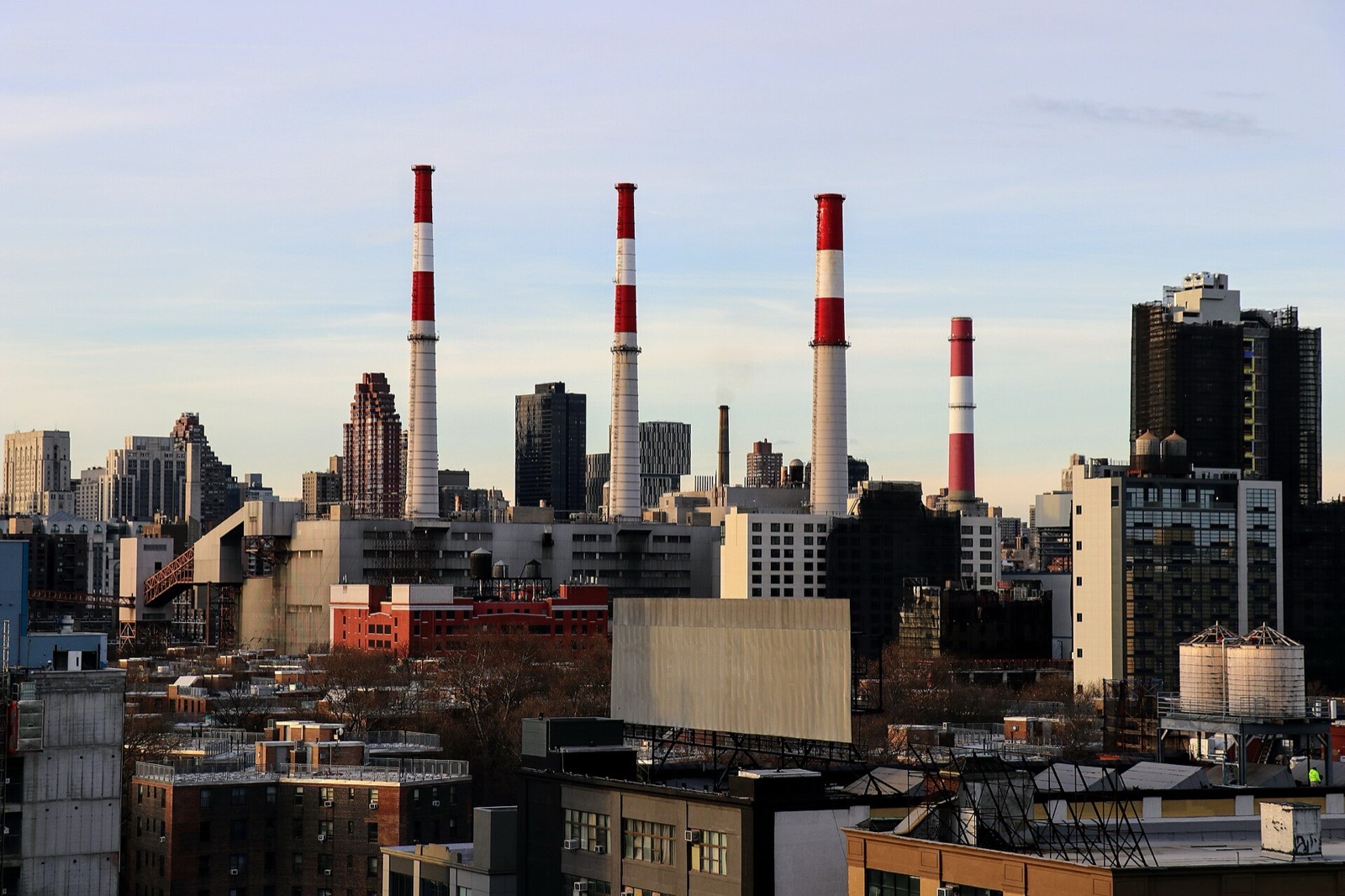
The largest of the six power plants NRG Energy agreed to sell on Monday stands on the East River in Long Island City, Queens. Ravenswood, a 2,050-megawatt mix of combined-cycle, simple-cycle and steam units, is going to an affiliate of LS Power with five smaller plants in Texas, Rhode Island and Connecticut, for $4 billion in cash.
NRG announced the sale before its third-quarter results call. It put the six plants at 4.9 gigawatts and said the price was 8.0 times their expected 2027 adjusted earnings before interest, taxes, depreciation and amortisation. That implies about $500 million of EBITDA a year, by our arithmetic. The deal needs clearance under the Hart-Scott-Rodino Act, approval from the Federal Energy Regulatory Commission and from the New York State Public Service Commission, and is expected to close in the second quarter of 2027.
Is $4 billion a high price?
Per kilowatt, it is low next to LS Power's other big purchase this year. At 4.9 gigawatts, LS Power is paying about $816 a kilowatt. In March it agreed to pay Constellation Energy $5 billion for five plants in Pennsylvania and Delaware with 4,374 megawatts, or about $1,140 a kilowatt, according to POWER magazine. Constellation was selling those plants because regulators required it as a condition of its $26.6 billion purchase of Calpine.
| Deal | Announced | Price | Capacity | Per kilowatt |
|---|---|---|---|---|
| NRG sells six plants to LS Power | 9 Nov 2026 | $4.0 billion | 4.9 GW | about $816 |
| Constellation sells five plants to LS Power | 18 Mar 2026 | $5.0 billion | 4.4 GW | about $1,140 |
| LS Power sells gas fleet and CPower to NRG | 12 May 2025 | about $12 billion | 13 GW gas, plus 6 GW demand response | about $920 for the gas alone |
| Rockland Capital sells Texas plants to NRG | 12 May 2025 | not given | 738 MW | $760 (NRG's figure) |
Per-kilowatt figures are this publication's arithmetic except where shown. The 2025 LS Power figure includes the demand-response business, so it overstates the price of the plants.
The comparison with NRG's own buying is closer. In May 2025 NRG agreed to buy 13 gigawatts of gas-fired plants and LS Power's CPower business for $6.4 billion in cash, $2.8 billion in stock and $3.2 billion of assumed debt, about $12 billion in all, POWER reported. NRG's release that day described the CPower side as a commercial and industrial "virtual power plant" business with 6 GW of capacity. Spread over the gas capacity alone, the total comes to about $920 a kilowatt.
The fleets are not alike, which is the honest caveat on all of these numbers. Three of the six NRG plants include steam or simple-cycle units, the kind that typically run only when demand peaks. Constellation's package was mostly combined-cycle plants, the workhorses of a gas fleet, plus one converted 1954 peaker at Edge Moor in Delaware.
Where are the plants, and what does NRG keep?
The sale takes NRG out of two markets. By the megawatt figures POWER published, the six plants break down like this:
- New York (NYISO): Ravenswood, 2,050 MW, about 41 per cent of the total
- New England (ISO-NE): Ocean State Power in Rhode Island, 478 MW, and Wallingford in Connecticut, 350 MW, together about 17 per cent
- Texas (ERCOT): Jack County, 1,280 MW, R.W. Miller, 538 MW, and Johnson County, 283 MW, together about 42 per cent
After the sale, NRG says, it will own and operate 20 gigawatts, evenly split between ERCOT and PJM, the grid that runs from New Jersey to Illinois. It expects another 1.1 gigawatts in Texas by 2028 from two projects backed by the Texas Energy Fund. Both sit at the centre of the argument over how to power new data centres, which we have written about before, and over who pays for the grid connections they need, a question in the Senate's permitting bill.
Why is NRG selling now?
To fund buybacks and keep its debt in line. NRG says the deal supports $3 billion of share repurchases across 2026 and 2027, including $1 billion of new buybacks it expects to begin before the end of this year. When the sale closes, it plans to repay $2 billion of debt to keep its current leverage, part of $3 billion of debt reduction planned for 2027.
"We are unlocking substantial value from a select group of assets," Robert Gaudette, NRG's president and chief executive, said in the release. NRG's net income for the third quarter was $561 million, up from $152 million a year earlier, POWER reported. Its 2027 guidance of $8.05 to $10.05 of adjusted earnings a share excludes the sale.
For LS Power, the deal rebuilds a gas fleet that shrank when it sold 13 gigawatts to NRG. Its gas portfolio will go from 2.2 gigawatts to 11.5 gigawatts once the Constellation purchase also closes, according to POWER. "Significant investment in firm, dispatchable power remains essential to grid reliability, and facilities that are already built, permitted, and interconnected deliver that power today," LS Power said, as quoted by POWER.
What happens next?
The first filing to watch is NRG's own. The company said it would file the full purchase agreement in a separate 8-K, which should show any termination fee and how the working-capital and other adjustments to the $4 billion will be calculated. After that come the three approvals, with New York's Public Service Commission ruling on the change of owner at Ravenswood. NRG's target for closing is the second quarter of 2027.
Deal terms, the 8.0 times multiple, the 4.9 GW total, the market for each plant, the approvals, the closing target, the uses of proceeds, NRG's portfolio after the sale and Robert Gaudette's statement are from NRG's press release of 9 November 2026, filed with the SEC as Exhibit 99.1 to a Form 8-K. Plant capacities and types, LS Power's statement, LS Power's fleet figures and NRG's third-quarter earnings are from POWER magazine (Darrell Proctor, 9 November 2026). The Constellation sale terms and plant list are from POWER magazine (Sonal C. Patel, 18 March 2026). NRG's 2025 purchase terms are from its press release of 12 May 2025, filed with the SEC, and POWER magazine's report of the same day. Prices per kilowatt, the implied EBITDA, the market shares and the Ravenswood share are this publication's arithmetic. The analysis is our own.
Topics businessnatural gaselectricitymergers and acquisitionsshare buybacksNew York